
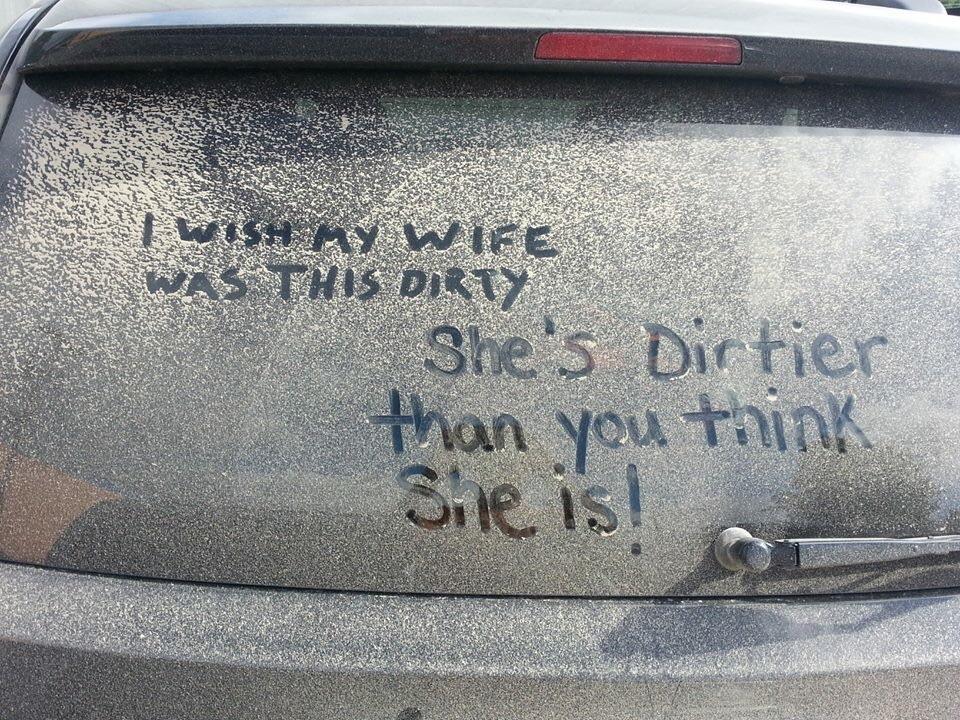
Cars bring out a particular brand of human comedy. We name them. We talk to them. We make excuses for them. We treat strange noises like personal betrayals and minor improvements like miracles. Somewhere between “my car has a personality” and “the check engine light has been on for two years and it’s fine,” there’s a whole genre of relatable car-owner humor.
But here’s the funny thing about that funny thing: behind almost every ridiculous statement we make about our cars, there’s a piece of real, useful advice trying to get out. The denial, the magical thinking, the elaborate workarounds — they’re all signs of something practical we could actually do differently.
This article is a tour through the funniest things car owners say, paired with the real, useful insight each one is trying (and failing) to express. By the time you finish, you’ll have laughed at least three times and learned something genuinely useful about taking care of your car. And if you happen to live in the Woodinville area and recognize yourself in too many of these examples, places like Ali’s Woodinville Auto Repair exist for exactly this reason — to translate the things we say about our cars into the actual maintenance our cars need.
Let’s get into it.
“It’s Just a Little Noise.”
This is the universal phrase used by people whose cars are absolutely making noises that mean something. The noise has been there for weeks. It’s getting louder. It now happens at predictable times. And still — “it’s just a little noise.”
What’s actually happening: Cars are mostly quiet. When they make new noises, those noises mean something. A grinding from the wheels is a brake problem. A squeak from the engine is a belt issue. A ticking from underneath is potentially exhaust. Each of these starts small and gets dramatically more expensive the longer it’s ignored.
The real advice: New noises deserve diagnostic attention, not optimistic denial. The cost of a 30-minute diagnostic visit is small compared to the cost of the repair when the “little noise” becomes a roadside breakdown.
“I’ll Get That Fixed Eventually.”
A close cousin of the “little noise” line. This one applies to dashboard warning lights, mysterious dripping spots on the driveway, and that thing where the car sometimes doesn’t start unless you turn the key a specific way you’ve now memorized.
What’s actually happening: Modern cars communicate problems through specific warning lights designed to indicate specific issues. The check engine light isn’t decorative. Fluid drips aren’t routine moisture. The car that “sometimes” doesn’t start is telling you about a battery, starter, or electrical issue that will eventually become “always” doesn’t start.
The real advice: When you find yourself with multiple “eventually” repairs accumulating, schedule a comprehensive inspection. A shop you trust can address them in a coordinated way that’s cheaper than handling each separately as it forces the issue.
“It Only Does That Sometimes.”
Often heard at the mechanic’s counter, accompanied by an attempt to make the car perform the symptom on demand, which the car will of course refuse to do.
What’s actually happening: Intermittent issues are real and often important. Modern car diagnostic systems can often capture intermittent problems even when they’re not happening at the moment of diagnosis, through stored fault codes and condition data. The “sometimes” almost always has a pattern — temperature, weather, time after starting, specific driving conditions.
The real advice: When you describe an intermittent issue to your mechanic, give them the conditions under which it happens. “Only when the car is cold,” “only when I’m going up hills,” “only after I’ve been driving for at least 20 minutes.” This information dramatically helps diagnostic accuracy.
“My Car Has a Personality.”
Sure it does. It also has a maintenance schedule, fluid requirements, and parts that wear out at predictable intervals.
What’s actually happening: We anthropomorphize cars because we spend so much time with them. They become characters in our lives — sometimes affectionate, sometimes adversarial, occasionally suspicious of our morning energy levels. The personality framing is harmless until it starts replacing actual diagnosis. “My car is being moody today” is fine. “My car is moody, that’s just how it is” when the symptom is actually a misfiring engine is less fine.
The real advice: Affection for your car is healthy. Letting that affection talk you out of investigating real issues is not. If the personality has started doing new things, those new things might be symptoms, not character development.
“I’m Pretty Sure It’s Fine.”
Said by someone whose car has just made a sound they’ve never heard before, while also slightly losing power on a moderate hill, while one of the dashboard lights has come on.
What’s actually happening: We are remarkably skilled at convincing ourselves that obvious problems aren’t problems, especially when we don’t want to deal with the inconvenience or expense of addressing them.
The real advice: When you hear yourself saying “I’m pretty sure it’s fine” about your car, treat that as the warning it is. Your subconscious has noticed something you’re trying not to notice consciously. Investigate.
“If I Just Drive Faster, the Noise Goes Away.”
This is true. The noise hasn’t gone away. You just can’t hear it over the wind.
What’s actually happening: Many car issues produce noises that are loudest at lower speeds and quieter at higher speeds. This is not evidence that the problem is solved. It is evidence that you’ve found a way to not hear the problem.
The real advice: This one writes itself. If the noise comes back when you slow down, the noise is still there. Get the noise checked.
“It’s Probably the Weather.”
The universal explanation for any unfamiliar car behavior in any season. Cold morning starts hard? It’s the weather. Hot afternoon engine running rough? It’s the weather. Rainy day brakes feel different? Also the weather.
What’s actually happening: Sometimes it IS the weather. Cold weather affects battery performance, oil viscosity, and tire pressure. Hot weather affects cooling systems and certain electrical components. Rain affects braking dynamics on certain road surfaces. But “the weather” can also be a story we tell ourselves when something actually mechanical is happening.
The real advice: If a weather-related issue repeats across seasons, it’s not the weather — it’s an underlying issue that the weather is exposing. A car that struggles to start every cold morning probably has a battery, starter, or fuel system issue that the cold weather is just amplifying.
“I’m Going to Wash It and See If That Helps.”
A surprisingly common response to mechanical issues. The logic isn’t entirely clear — possibly something about restoring the car’s dignity — but it’s a real pattern.
What’s actually happening: A clean car does sometimes feel like it drives better. There’s a small psychological boost from operating a vehicle that doesn’t have last week’s coffee spilled in the cupholder. There is, however, very limited mechanical benefit unless the issue was specifically related to grime affecting sensors, vision, or external components.
The real advice: Wash the car for the joy of having a clean car. Address mechanical issues by addressing mechanical issues. The two are separate categories.
“I Know My Car.”
The confident statement of every car owner who is about to be surprised by something their car is doing.
What’s actually happening: You know your car’s normal behavior. You can identify when something is different. That’s actually genuinely useful — owners who notice subtle changes catch problems earlier than owners who don’t. The trap is when “I know my car” turns into “and therefore I know what’s wrong with it” without actual diagnostic work.
The real advice: Your awareness of changes is valuable. Your diagnostic conclusions might not be. Use the awareness to know when to seek expert input rather than to skip seeking it.
“It Was Doing It Yesterday, I Promise.”
The mechanic’s familiar friend. You bring the car in for the issue that has been bothering you for weeks. The car arrives at the shop in a state of pristine functionality. The mechanic looks at you with the polite skepticism reserved for these moments.
What’s actually happening: Cars sometimes do this. The combination of warming up during your drive to the shop, the specific operating conditions of the visit, and possibly some kind of automotive stage fright produces a temporary disappearance of symptoms.
The real advice: Record the symptoms when they occur. Phone videos showing dashboard warning lights, sounds captured during operation, or video of the issue happening give the mechanic something to work with even when the car decides to behave at the appointment.
“I’ll Just Replace It Myself.”
The confident statement of someone with a YouTube tutorial open in one tab and a parts catalog open in another, about to spend their Saturday discovering that automotive repair is harder than it looks.
What’s actually happening: Some auto repairs are genuinely DIY-appropriate. Oil changes, air filter replacements, wiper blade swaps, simple electrical issues — many car owners handle these successfully. Other repairs require specialized tools, expertise, and access that home garages don’t have.
The real advice: Match the project to your actual skill level. Underestimating the difficulty of a repair leads to half-completed projects, damaged components, and the special humiliation of having to call a tow truck to deliver a partially disassembled car to a shop. Be honest about which projects belong in the DIY category and which belong at a professional shop.
“I’ll Just Drive It Until It Breaks.”
The strategy of someone who has decided that proactive maintenance is for other people.
What’s actually happening: Cars driven this way break down. Sometimes the breakdowns are inconvenient (in a parking lot). Sometimes they’re dangerous (on a highway). Sometimes they’re expensive in ways that proactive maintenance would have prevented (catastrophic engine damage from skipped oil changes).
The real advice: Drive-it-until-it-breaks is the most expensive long-term strategy you can adopt. The savings from skipped maintenance are dramatically outweighed by the costs of preventable failures. It’s also the strategy most likely to result in being stranded somewhere inconvenient.
The Real Wisdom Behind All of This
Strip the humor out of these statements and you’re left with something universal: cars require ongoing attention, and humans are reliably good at avoiding ongoing attention until forced.
The funny statements above are the linguistic patterns we use to avoid the actual decision-making that car ownership requires. “It’s just a little noise” defers the decision to investigate. “I’ll get that fixed eventually” defers the decision to schedule the work. “I’m pretty sure it’s fine” defers the decision to face the reality of what we’re observing.
The path through this is straightforward — even though it’s not always easy:
- Find a quality auto repair shop you trust before you desperately need one
- Address small issues when they’re small
- Take warning signs seriously — your car’s communication is information worth listening to
- Build a maintenance routine and stick to it
- Distinguish between car humor (fine) and car denial (expensive)
This is unglamorous advice that everyone already knows and most people don’t follow. The reason for that is the comedy material at the top of this article. We talk ourselves out of doing the thing we should do, in increasingly creative ways, until the car itself forces the issue.
For drivers in the Woodinville and broader Eastside area, having a shop like Ali’s Woodinville Auto Repair — experienced technicians, transparent communication, work on all makes and models — turns the “I should really get that looked at” into something you can actually act on without dread. The shops you trust make following the advice easier, which is half the battle.
A Few Genuine Car Puns to Send You Off (Because This Is, After All, LaughPuns.com)
- I bought a new car because my old one was tire-d.
- My mechanic is honest — he never breaks the brakes.
- I told my car a joke. It cracked up. Now I need a new windshield.
- I tried to write a car pun, but it kept stalling.
- My car runs on gas. My credit card runs on premium.
- I don’t trust mechanics who can’t keep their stories straight. They tend to be transmissions of fiction.
- I had a friend who only drove convertibles. He had a roof-loose attitude toward car ownership.
- My car wouldn’t start this morning. It was just exhausted.
FAQs
Q: When should I actually take my car to a mechanic instead of ignoring something?
A: When something has changed and persists. New noises, new dashboard lights, new smells, new behaviors — these aren’t decorative. They mean something specific, and addressing them while they’re new is dramatically cheaper than waiting until they force the issue.
Q: How do I find a mechanic I can trust?
A: Look for ASE-certified technicians, transparent written estimates, willingness to explain and show you the problem, warranties on work, and a track record of long-term community presence. Quality shops have these characteristics in common across regions.
Q: Is it really worth fixing small problems immediately?
A: Almost always, yes. The cost differential between addressing a small problem early and dealing with the cascade after it becomes a larger problem is dramatic. A minor fluid leak today might be a major engine repair next month. A small brake issue today might be a complete brake system overhaul if ignored too long.
Q: How often should I take my car in for routine maintenance?
A: Follow your manufacturer’s maintenance schedule. For most modern vehicles, this means oil changes every 5,000 to 10,000 miles, more comprehensive services at 30,000-mile intervals, and annual inspections for older vehicles. A good shop will recommend appropriate intervals based on your specific vehicle and driving patterns.
Q: What should I do if I think my mechanic is recommending unnecessary repairs?
A: Get a second opinion. Reputable shops welcome this and won’t be defensive about it. If you consistently feel pressured into unnecessary work at one shop, find a different shop. Quality mechanics earn long-term customer loyalty through honesty — not through aggressive upselling.
Q: Can I save money by doing my own car maintenance?
A: For some tasks, yes — oil changes, air filters, wiper blades, and similar items. For more complex work, the time investment, specialized tools required, and risk of mistakes usually make professional service the better value, even before factoring in the warranty quality shops provide on their work.
