
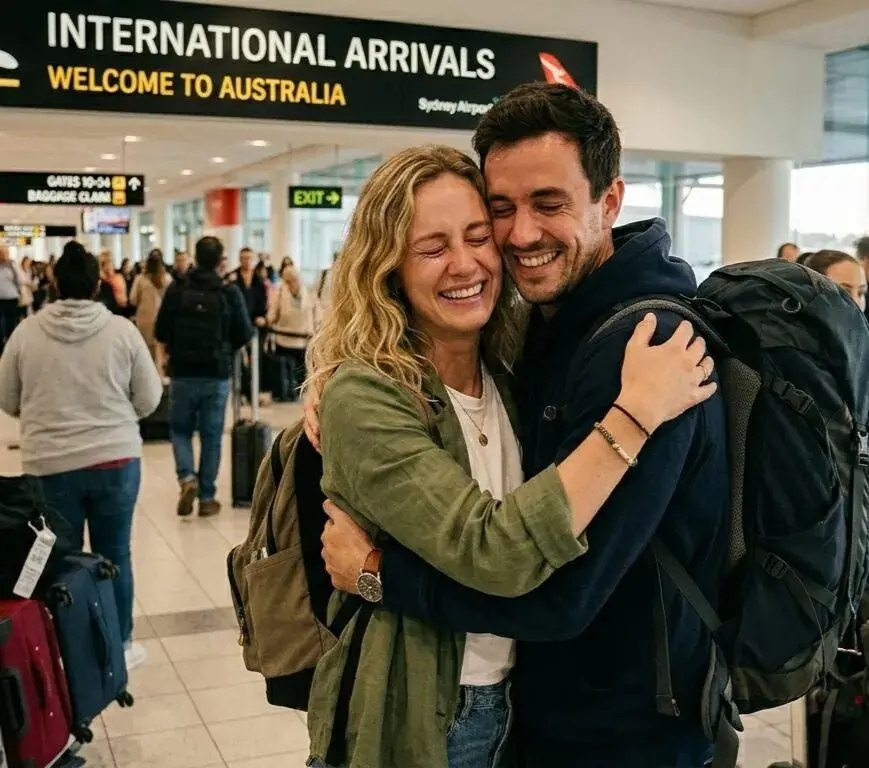
Before you gather a single document, one decision shapes your entire partner visa: are you applying from inside Australia or from outside it? That choice sets your subclass, your rights during the wait, and your ability to travel, and it is not always yours to make freely.
The onshore and offshore streams lead to the same destination, permanent residence, but the experience along the way is different. Picking the right lane for your situation is one of the first things worked out in any Partner Visa Australia plan, because switching later is not always simple.
Two streams, set by where you are
The pathway is decided by where the applicant is located when they lodge.
- Onshore: the Subclass 820 (temporary) leading to the Subclass 801 (permanent), for applicants in Australia.
- Offshore: the Subclass 309 (provisional) leading to the Subclass 100 (permanent), for applicants outside Australia.
Both are two stage visas. Both require the same relationship evidence and the same eligible sponsor. The difference is what happens to you while you wait.
The real difference: your life during processing
| Feature | Onshore (820/801) | Offshore (309/100) |
|---|---|---|
| Where you apply from | Inside Australia | Outside Australia |
| Bridging visa | Bridging Visa A on lodgement | None |
| Can you stay in Australia? | Yes, while it processes | No, wait offshore for grant |
| Work and Medicare while waiting | Generally yes | Not until the 309 is granted |
| Travel in and out freely | Only with a Bridging Visa B | Yes, until the 309 is granted |
The onshore trade off: stability, but watch your travel
Applying onshore is attractive because you get to stay with your partner and keep your life running. The Bridging Visa A generally lets you remain lawfully, work, and use Medicare while the 820 processes, even if your original visa expires along the way.
The catch is travel. A Bridging Visa A does not let you leave and return. If you fly out on it, it ceases, and you can be stranded outside Australia with your application still pending. To travel, you must apply for a Bridging Visa B first. For anyone with family overseas or work that requires travel, this is a crucial detail, not a footnote.
The offshore trade off: freedom to travel, but you wait apart
Applying offshore means the applicant waits outside Australia until the 309 is granted. That is hard on couples who want to be together, but it comes with one real advantage: until the visa is granted, the applicant can travel freely rather than being tied to a bridging visa’s rules. For couples who are not yet living in Australia, or whose lives are still based overseas, offshore is often simply the natural fit.
| Worked example. Hana is in Australia on a student visa when she and Liam decide to apply. Because she is onshore, she lodges an 820 and receives a Bridging Visa A, so she keeps studying and working while they wait. Midway through, her father falls ill overseas. Because she thought ahead, she applies for a Bridging Visa B before booking flights, travels to see him, and returns without breaking her bridge. Had she simply flown out on the Bridging Visa A, she could have been locked out of Australia with her 820 still in the queue. |
Can you switch between onshore and offshore?
Couples sometimes ask whether they can start offshore and finish onshore, or the reverse. You cannot simply transfer a lodged application from one stream to the other. The stream is fixed by where the applicant was when they lodged. What can change is your situation: an offshore 309 applicant who later comes to Australia on another visa does not convert their 309 into an 820, and an onshore applicant generally should not leave without the right bridging arrangements. Because a wrong move here can cost you your place in the queue or your lawful status, this is one to plan carefully before you act, not after.
Frequently asked questions
Can I choose onshore or offshore freely?
Only within the limits of where you actually are when you lodge, and any conditions on your current visa. Some visas carry conditions that affect onshore lodgement, so check yours first.
Which is faster, onshore or offshore?
Processing times vary by stream and caseload, and neither is reliably faster. The bigger practical difference is your rights during the wait, not the speed.
Can I travel while my onshore application is processing?
Not on a Bridging Visa A alone. You must be granted a Bridging Visa B before leaving, or your bridge can cease.
Do onshore and offshore lead to the same permanent visa?
They lead to equivalent permanent outcomes: the 801 onshore and the 100 offshore. Both are permanent partner visas.
What if my current visa expires while I wait onshore?
If you applied onshore while holding a valid visa, your Bridging Visa A generally keeps you lawful when your substantive visa ends.
Onshore or offshore is not about which visa is better. It is about which fits your life right now. Weigh where you are, how much you need to travel, and whether staying together during the wait matters most, then commit to the lane that suits you, with your eyes open to its rules.
This article is general information only and does not constitute legal or migration advice. Visa conditions and processing practices change over time. Confirm current requirements with the Department of Home Affairs or a registered professional before acting.
