
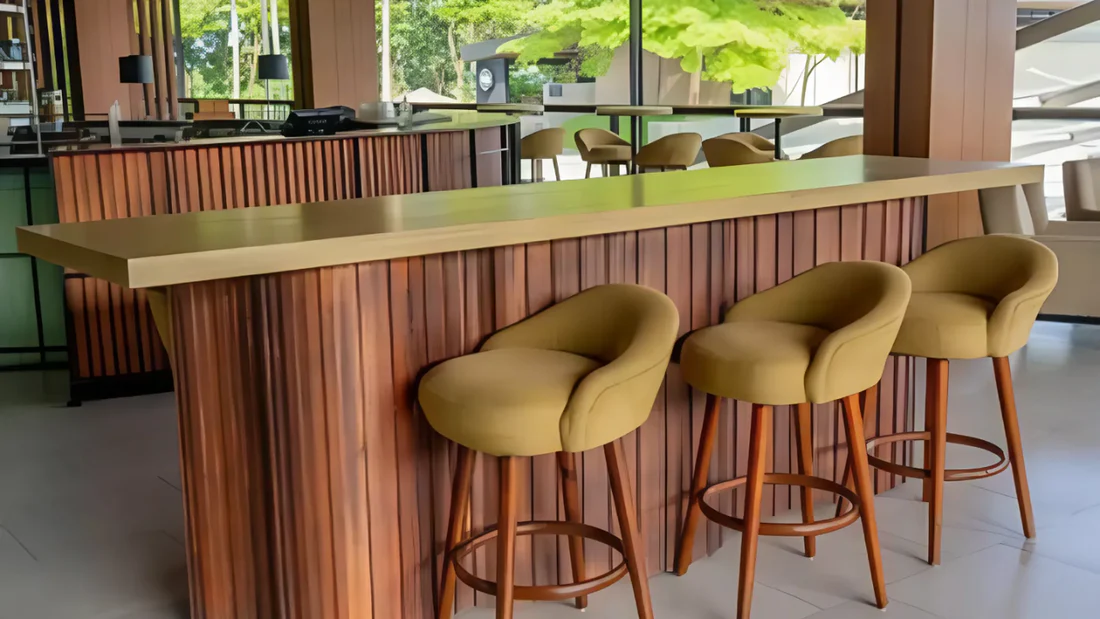
Barstools in restaurants once had a simple role. They belonged at the bar, lined up in front of taps, bottles, mirrors, and bartenders. Guests sat high because the bar was high. The furniture followed the structure.
That has changed.
Today, taller seating is present throughout the restaurant. You see it at window counters, communal tables, chef counters, cocktail ledges, waiting zones, coffee bars, hotel lobbies, food halls, and fast casual dining rooms. Restaurant bar stools are no longer just bar furniture. They have become tools for layout flexibility, social energy, visual design, and revenue control.
The rise of taller restaurant bar stools says something important about dining itself. Guests are eating differently, moving differently, staying for different reasons, and judging restaurants through a more visual and informal lens.
Taller Seating Fits a More Flexible Restaurant Model
Older dining rooms were built around predictable meals. Guests arrived, sat at standard height tables, ordered, ate, paid, and left. The layout had one main purpose.
Modern restaurants have to do much more. The same space may serve morning coffee, lunch traffic, remote workers, quick pickup orders, happy-hour drinks, date-night guests, and late-evening snacks. Standard tables still matter, but they cannot solve every space problem.
Taller stools help restaurants create zones without adding walls. A high counter can separate pickup traffic from seated guests. A raised communal table can give solo diners a comfortable place to sit without taking up a four-top. A window ledge can turn a narrow wall into usable seating.
That flexibility is valuable because every square foot now has to work harder. Restaurants face pressure from rent, labor, food costs, and shifting traffic patterns. Tall seating helps operators add function without making the room feel packed.
It can support:
- Faster visits during busy periods
- Better use of narrow spaces
- Comfortable seating for solo guests
- More casual drink and appetizer orders
- Stronger visual activity in the dining room
The furniture is getting taller because the restaurant model itself is becoming less fixed.
The Bar Feeling Has Moved Into the Whole Room
In the past, the bar was its own area. Guests who wanted drinks sat there. Guests who wanted a full meal sat at tables. The two experiences felt separate.
That line is much softer now.
Many restaurants borrow a bar’s energy and spread it throughout the dining room. High-tops, counter seating, stool-height rails, and communal tables make the room feel more active and less formal. Even restaurants without a major bar program use taller seating to create a lively, modern atmosphere.
A taller stool changes how guests experience the space. People sit more upright. They look around more. They feel connected to the room instead of tucked away inside it. At a standard table, a guest settles in. At a high seat, the guest feels part of the movement.
That is why tall seating works so well in cafés, burger spots, ramen shops, pizza concepts, sports bars, hotel restaurants, and fast casual brands. It adds energy without needing loud décor or crowded layouts.
Dining Is More Social, Visual, and Informal
Now, restaurants are rated before the food arrives. Guests see lighting, seats, layout, backgrounds, movement, and the general vibe of the room. Some guests will choose a seat depending on the feel of the room. Others see what the room looks like in photographs and films.
Taller chair helps build visual layering. Only ordinary tables can make a space look flat. A room with booths, tables, bar stools, counters, and high tops feels more dynamic, more alive.
This is important since dining today is more casual than it used to be. Quality is still desired by guests, but they don’t always want stiff. They want a location where they can have a drink, share small plates, have a quick lunch, work for a bit, or meet friends without feeling committed to a full dining experience.
Taller stools keep maintaining that easy rhythm. They give an impression of openness, speed, sociability, and up-to-dateness in the restaurant.
Height Can Help Revenue, but Comfort Still Decides Everything
Restaurant owners often like tall seating because it can improve space efficiency. A counter along a wall can add seats where a full table would not fit. A high communal table can serve several guests without breaking up the room. Bar seating can also support quicker turns because guests often treat those seats as more casual.
Still, height alone does not make a stool successful.
If the seat is too narrow, too hard, too slippery, or poorly matched to the counter, guests will notice quickly. Without a comfortable footrest, the stool feels awkward. If the frame wobbles or the finish wears too fast, the whole area starts to feel neglected.
Good tall seating depends on practical details:
- Proper seat height for the counter
- Strong footrest placement
- Enough spacing between stools
- Durable frames and finishes
- Comfortable seat width
- Easy movement for cleaning and service
A tall stool can help a restaurant use space better, but only if guests actually want to sit there.
Counter Dining Changed What Guests Expect
Another reason why barstools keep getting taller is the popularity of counter dining. Today’s diners want to eat at chef counters, sushi bars, coffee bars, bakery counters, ramen counters, and open kitchen seats.
Dining at the counter is direct. Guests can watch the meal being cooked, see drinks being prepared, chat with the staff, or glance into the room. It provides access in ways that are not necessarily possible at a traditional table.
Counter seating is less awkward than sitting alone at a tiny table for solo diners. For couples, it can be natural and spontaneous. Small groups can sit high and relax with beverages and shared meals.
This is a good indication of how much the dining experience has evolved. Restaurants are selling more than food. They are selling moments, movement, mood, and different ways to pass the time.
The Real Message Behind Taller Stools
More and more restaurants are switching to taller bar stools as they adapt to a more flexible dining culture. Guests want spaces that are casual yet designed, social yet not frantic, efficient yet not hurried. Operators seek a design that is flexible to accommodate variable traffic, narrower margins, and changing guest needs throughout the day.
That doesn’t mean every restaurant has to pack the room with high seating. Too many tall stools might make the place uninviting for families, older people, or anyone who likes normal chairs and booths. Dining rooms are finest when they use height in a balanced blend.
A strong arrangement can incorporate regular tables, booths, high tops, bar stools, and counter seating. They each have a different purpose.
It’s not really about height, this taller stool craze. It’s about being flexible. Restaurant bar stools keep rising taller because eating out has become speedier, more visual, more social, and more adaptable. The smartest restaurants are leveraging that height wisely, not as a gimmick, but to make the room work harder, while keeping guests comfortable.
